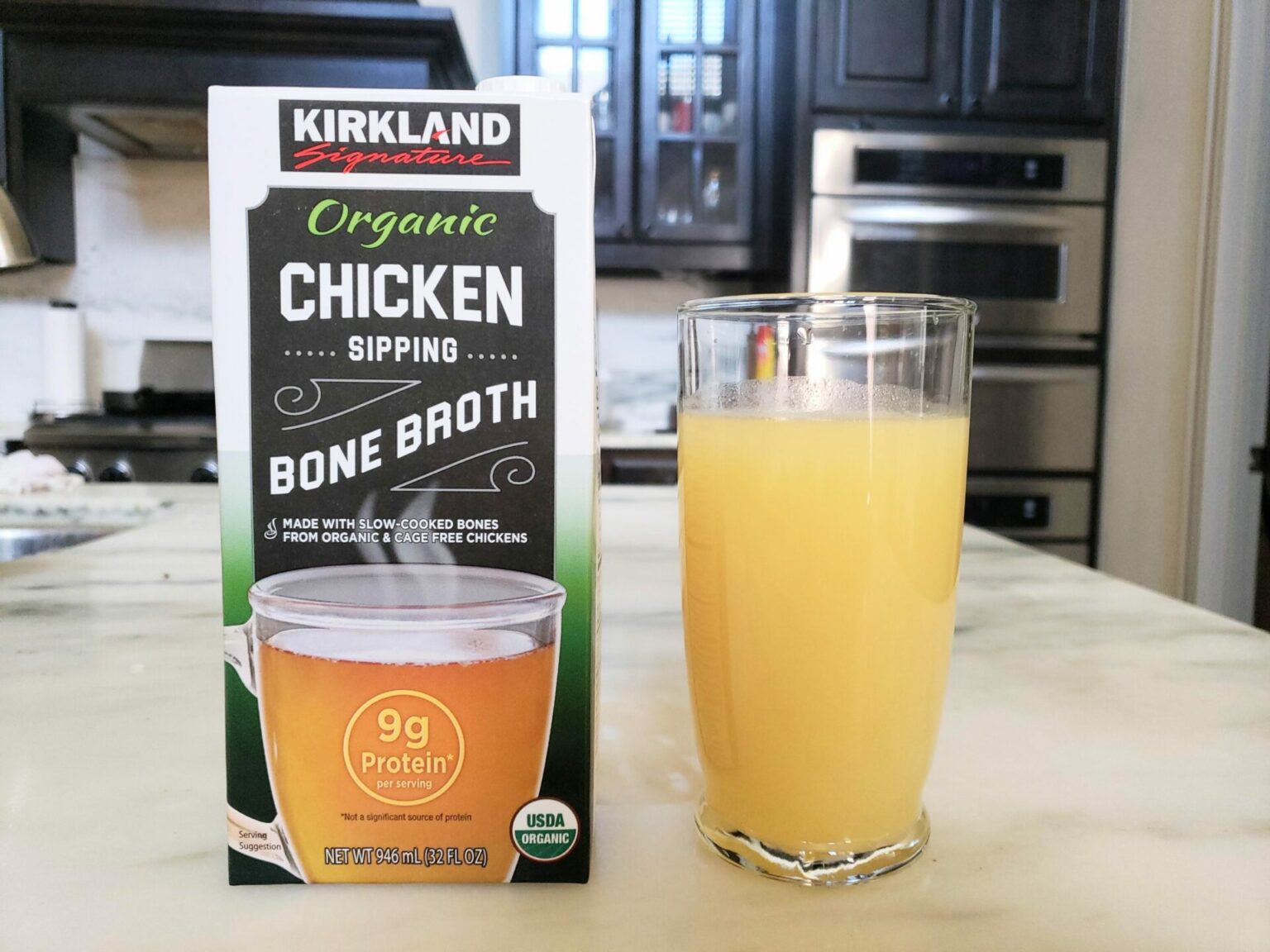
Walk into any Costco and you’ll see people hoarding those 32-ounce cartons of Culinary Treasures or the Kirkland Signature brand like they’re prepping for a liquid-only apocalypse. It’s wild. But let's be real—the obsession with bone broth costco chicken options isn't just about the low price or the massive boxes that take up half your pantry.
It’s about the convenience.
Most of us don't have twelve hours to simmer carcasses on the stove. We just don't. Life is too fast for that kind of commitment. So, we turn to the big red sign. But is the stuff in the box actually doing anything for your gut health, or is it just overpriced salty water? Honestly, the answer is a bit more complicated than the label makes it look.
What’s Actually Inside Your Bone Broth Costco Chicken Cartons?
If you look at the back of a carton of Culinary Treasures Organic Chicken Bone Broth—which is the staple at most Costco locations—the ingredient list is surprisingly clean. You’ve got organic chicken stock, organic vegetable aromas (onions, carrots, celery), sea salt, and some spices. It’s pretty standard stuff.
But here is the kicker.
Traditional bone broth is supposed to be thick. I’m talking Jello-level thick when it’s cold. That’s the collagen. If it doesn't wiggle, it’s basically just stock. Costco’s shelf-stable versions are thin. They pour like water. This happens because the high-heat sterilization process needed for shelf stability can sometimes break down those long-chain proteins, or, more likely, they aren't using enough bones per gallon of water to reach that "gel" state.
I’ve spent hours looking at the protein counts. Most of these Costco brands offer about 9 or 10 grams of protein per serving. That’s decent. It’s way better than a standard $1.00 can of chicken soup from the grocery store. But compared to a premium brand like Kettle & Fire or a local craft broth, it’s a bit thinner on the nutritional profile. You're getting convenience, but you're losing that ultra-rich, gelatinous texture that some people swear by for joint health.
Why the Kirkland Signature vs. Culinary Treasures Debate Matters
Costco plays a funny game with brands. Sometimes you’ll see the Kirkland Signature Organic Chicken Bone Broth, and other times it’s the Culinary Treasures brand. Usually, they don't carry both at once. It depends on your region and whatever supply chain magic is happening behind the scenes.
Kirkland’s version is often praised for being slightly more savory. It feels more "homemade." Culinary Treasures, on the other hand, can sometimes lean a little heavy on the celery and onion notes. It tastes more like a base for a soup than something you’d want to sip out of a mug at 8:00 AM.
Price-wise? You literally cannot beat it.
You’re usually looking at around $15 to $20 for a six-pack of 32-ounce cartons. If you went to a high-end grocery store and bought six cartons of a specialty bone broth, you’d easily drop $50 or $60. It’s a massive gap. For a lot of families, that price difference is the only reason they can afford to include bone broth in their diet at all. It’s the "everyman’s" health food.
The Sodium Trap
We have to talk about the salt. It’s the elephant in the room. Most bone broth costco chicken products contain about 450mg to 550mg of sodium per cup. If you’re drinking two cups a day to heal your gut, you’re knocking back 1,000mg of sodium before you’ve even had dinner.
That’s nearly half the RDA for an adult.
If you have high blood pressure or you’re sensitive to salt, this is a problem. I’ve noticed that when I drink the Costco stuff straight, I feel a bit bloated afterward. It’s ironic, right? You drink it to help your digestion, but the salt makes you puff up. The "No Salt Added" versions are rarely found in the warehouse, which is a total bummer.
Does It Actually Help Your Gut?
The hype around bone broth is mostly centered on glycine and glutamine. These are amino acids that supposedly help "seal" the lining of your gut. Dr. Amy Myers and other functional medicine experts often recommend it for people dealing with "leaky gut" or general inflammation.
Does the Costco version work for this? Sorta.
It’s definitely better than eating a sleeve of crackers. However, because it’s a mass-produced, shelf-stable product, the concentration of these healing compounds is lower than what you’d get if you bought a bag of frozen bones and did it yourself. But let’s be honest: are you actually going to boil bones for 24 hours?
Most people won't.
So, the "best" bone broth is the one you actually consume. If the Costco chicken bone broth is what gets you to stop drinking soda or snacking on processed junk, then it’s a massive win. Even at a lower concentration, you’re still getting those minerals and proteins that your body craves.
Creative Ways to Use It (Beyond Just Sipping)
Don’t just drink it plain. That gets boring after three days. Seriously, it’s like drinking lukewarm chicken water.
- The Rice Swap: Stop using plain water for your rice or quinoa. Use the broth instead. It infuses the grains with protein and a way better flavor profile.
- The Morning "Latte": Add a teaspoon of grass-fed butter or ghee and a pinch of turmeric to your warmed broth. Use a frother. It sounds weird, but it makes the texture much creamier and mimics that "fatty" mouthfeel of homemade broth.
- The Deglaze: When you’re sautéing vegetables, use a splash of the broth to scrape up the brown bits from the pan.
- The Smoothie Secret: If you’re brave, you can use a little bit of the broth in a savory green smoothie. Okay, maybe that’s too far for most people.
What People Get Wrong About "Organic" Labels at Costco
People see "Organic" on the Costco box and think it means the chickens were frolicking in a meadow. It's Costco—they move a lot of volume. "Organic" in this context mostly means the feed was organic and they weren't pumped with certain antibiotics. It doesn't necessarily mean it’s the highest-tier, pasture-raised, regeneratively farmed broth on the planet.
It’s a middle-ground product. It’s better than the bottom-shelf stuff, but it’s not the gold standard.
The Cost-Benefit Analysis of Making Your Own
I did the math once. To make the equivalent of a Costco six-pack, you’d need about 5-8 pounds of organic chicken bones. Depending on where you live, organic chicken carcasses can cost $3 to $5 per pound.
Add in the carrots, onions, celery, apple cider vinegar (to pull out the minerals), and the electricity/gas for 24 hours of cooking.
You’re actually spending more money to make it yourself. And that’s not even counting your time. Your time has a dollar value. This is why the bone broth costco chicken options are so dominant. They have solved the price-to-labor ratio in a way that’s almost impossible for a home cook to beat.
How to Tell if a Batch is "Off"
Every once in a while, you’ll see people on Reddit complaining about a weird smell from their Costco broth. Since it’s a natural product, there can be slight variations in the color and scent between batches.
However, if it smells like sulfur or has a sour tang, don’t risk it. Costco has one of the best return policies in the world. Seriously, they’ll take back a half-eaten rotisserie chicken if you have a valid reason. If your broth tastes "funky" in a bad way, take it back. Don't play games with food poisoning.
Storage Tips You’re Probably Ignoring
Once you open that 32-ounce carton, the clock starts. The box says it’s good for 7-10 days in the fridge. In my experience? It’s more like 5 days.
If you aren't going to finish it, pour it into an ice cube tray and freeze it. Those "broth cubes" are perfect for tossing into a pan when you’re cooking eggs or steaming broccoli. It keeps the nutrients alive and prevents you from pouring $3 worth of liquid gold down the drain.
Is It Worth the Hype?
Look, I’m a fan of being a "practical minimalist." I’d love to be the person who makes everything from scratch, but I have a job and a life. Costco’s chicken bone broth is a solid "B" grade product.
It’s not an "A+" artisanal broth, but it’s a hell of a lot better than a "D" grade bouillon cube.
It provides a low-barrier entry point into a healthier lifestyle. If it helps you recover from a workout or soothes your stomach after a heavy meal, then it’s doing its job. Just keep an eye on that sodium and maybe mix in some fresh ginger or lemon juice to brighten it up.
Better Ways to Drink Your Broth
To maximize what you're getting from your Costco haul, don't just microwave it in a plastic cup. That’s depressing.
Next Steps for Your Broth Routine:
- Transfer to Glass: As soon as you open a carton, consider moving it to a glass mason jar. It stays colder and tastes "cleaner" than it does sitting in the opened cardboard lined with plastic/foil.
- Add Your Own Collagen: If you're disappointed by the thinness, whisk in a scoop of unflavored collagen peptides while it's hot. This gives you the protein boost that mass-produced broths sometimes lack.
- The 3-Day Test: Try replacing your second cup of coffee with a mug of salted bone broth for three days. Watch your energy levels. Many people find the electrolytes in the broth provide a more stable "lift" than the caffeine crash.
- Check the "Best By" Dates: At the warehouse, dig to the back of the pallet. The dates can vary by months, and you want the freshest batch possible to ensure the fats haven't started to oxidize.
- Herb Infusion: Throw a sprig of fresh rosemary or thyme into the pot while you heat it up. It makes the "boxed" flavor vanish instantly.
Using these tweaks turns a basic commodity product into something that feels like a luxury health ritual. You don't have to be a purist to get the benefits; you just have to be consistent.