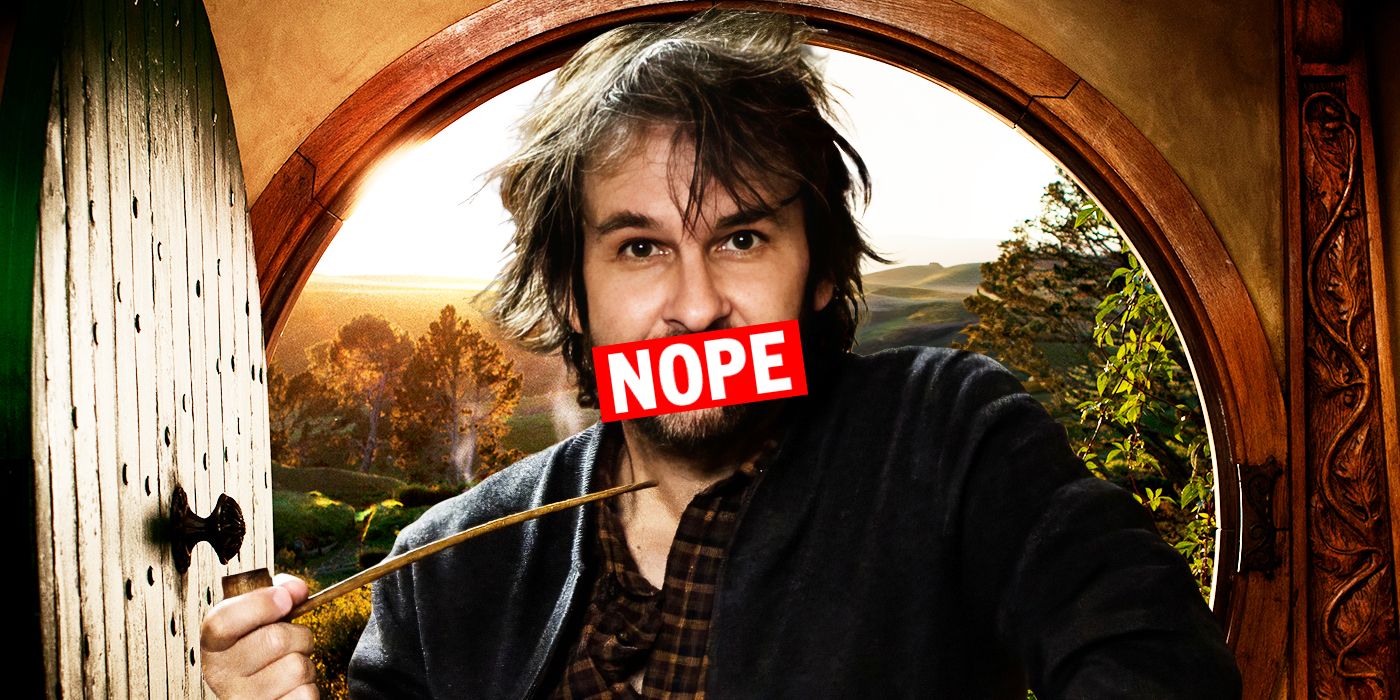
You ever sit back and wonder how the guy who gave us the majestic vistas of Middle-earth once spent his weekends covered in gallons of maple syrup and red dye? It’s a trip. Before he was Sir Peter Jackson, the Oscar-winning architect of The Lord of the Rings, he was just a kid from New Zealand with a 16mm camera and a disturbing obsession with exploding heads.
Honestly, Peter Jackson Braindead (or Dead Alive, if you’re in North America) is the peak of that "Splatstick" era. It’s gross. It’s loud. It’s technically a romantic comedy, if you consider a zombie baby in a blender "romantic."
Released in 1992, this movie didn't just push the envelope; it shredded the envelope and then set it on fire.
The Lawnmower Scene and the 300-Liter Myth
When people talk about this movie, they always go straight to the lawnmower. It’s the centerpiece. Lionel Cosgrove, our awkward hero played by Timothy Balme, decides the only way to clear a house full of the undead is to strap a lawnmower to his chest and start swinging.
It’s absolute carnage.
People love to quote stats about how much fake blood was used. You’ll see numbers like 300 liters tossed around. That’s actually a low-ball for the whole production. By the time they wrapped that final house party sequence, the crew was literally slipping on the floor. They were pumping blood at a rate of five gallons per second.
Imagine that.
The stuff was everywhere. It got into the cameras. It ruined the sets. It probably still haunts the floorboards of whatever studio they used in Wellington.
Why the Rat-Monkey is a Practical Effects Masterclass
Most modern horror relies on CGI that looks like a wet marshmallow. Jackson didn't have that luxury in the early 90s. He had Richard Taylor and a team that would eventually become Weta Workshop.
The "Sumatran Rat-Monkey" that kicks off the whole plague is a hideous puppet that honestly looks more terrifying than a $200 million Marvel villain. It’s tactile. You can see the grime on it. When it bites Lionel’s mother, Vera, the makeup effects by Bob McCarron kick into high gear.
Vera’s slow transformation is disgusting. Her skin starts falling off into the custard at a lunch party. She swallows her own ear. It’s played for laughs, but the technical skill required to make a prosthetic ear look appetizingly chewy is next-level.
From Splatter to Tolkien: The Creative Jump
People often ask how a guy who made a movie about a kung-fu priest ("I kick arse for the Lord!") got the keys to the most expensive fantasy franchise in history.
It wasn't a mistake.
If you watch Peter Jackson Braindead closely, you see the blueprint for The Return of the King. Look at the camera movements. Jackson loves those swooping, kinetic shots. He used the same Putangirua Pinnacles for the opening "Skull Island" scenes that he’d later use for the Paths of the Dead.
He proved he could manage a massive crew and a complex technical shoot on a tiny budget of $3 million. He was resourceful.
When the production ran out of money, he didn't quit. He actually finished a week early and had about $45,000 left over. Most directors would pocket that or buy a nice car. Jackson? He used it to spend two days filming the scene where Lionel takes the zombie baby to the park.
That’s the difference. That’s why he’s a legend.
The Different Versions You’ll Find Today
Navigating the various cuts of this film is a bit of a nightmare. Because of copyright issues with a totally different movie called Brain Dead (1990), the US version was renamed Dead Alive.
- The 104-minute Cut: This is the original New Zealand theatrical version. It’s the gold standard.
- The 97-minute Cut: Often the "Unrated" version in the US. It’s mostly there, but some of the pacing is slightly different.
- The 85-minute R-Rated Cut: Don't bother. It hacks out the heart of the movie (and most of the intestines).
If you're looking for a high-def version, things get tricky. For years, fans have been begging for a 4K restoration. Jackson has mentioned he wants to do it, but he’s been busy with Beatles documentaries and restoring old WWI footage.
How to Appreciate Braindead in 2026
If you’re diving into this for the first time, or maybe revisiting it after a decade, here’s how to actually get the most out of the experience:
- Watch the background. The sight gags in the corners of the frame are often funnier than the main action.
- Focus on the sound design. The squelching noises are incredibly specific. They used everything from wet sponges to actual animal innards to get those sounds right.
- Appreciate the Mother-Son dynamic. Strip away the zombies, and it’s a weirdly accurate portrayal of a toxic, overbearing parent. It’s Psycho on speed.
Peter Jackson Braindead isn't just a gross-out flick. It’s a testament to what happens when a creative mind is given just enough money to be dangerous. It’s messy, it’s offensive, and it’s a vital piece of cinematic history that explains exactly how we got the cinematic masterpieces that followed.
To really see where Jackson’s head was at, track down a copy of the original 104-minute New Zealand cut. Watch it with the lights off and a very strong stomach. Pay attention to the way he uses "forced perspective" in the house—a trick he’d later use to make Hobbits look small. Once you see the DNA of Middle-earth in the blood-soaked hallways of Lionel’s house, you’ll never look at a lawnmower the same way again.